

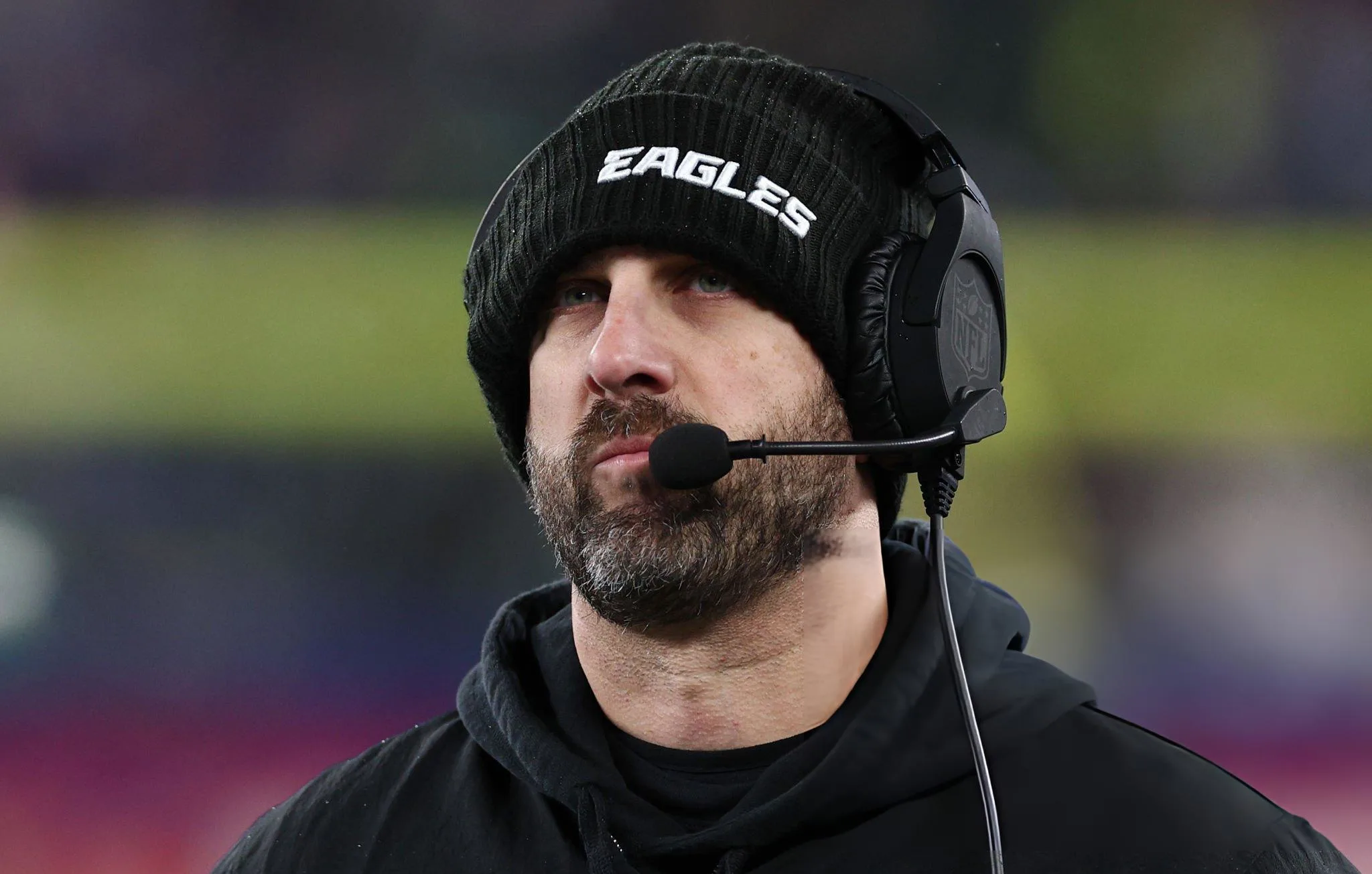

The Philadelphia Eagles walked out of their matchup against the Green Bay Packers with a win, but the storyline everyone is chewing on has nothing to do with the scoreboard. It’s head coach Nick Sirianni’s late-game decision that detonated across social media.
What should have been a routine closing sequence in a winnable game instead turned into fuel for some of the strongest fan backlash Sirianni has faced all season. And honestly, the frustration is justified.
Because with the game hanging in the balance, Sirianni dialed up a play call that made zero strategic sense relative to the situation. Fans weren’t just annoyed. But they were stunned.
What Actually Happened during the 4th quarter of the Eagles vs Packers Game?
Late in the game, the Eagles found themselves facing 4th-and-6 from the Green Bay 35-yard line. Instead of punting, chewing clock, or opting for a higher-percentage play, Sirianni authorized an aggressive deep-pass concept. The call immediately raised eyebrows because the downside was massive: fail, and you’re giving the Packers a premium field position with time to attack.
And that’s exactly why fans erupted. One fan summed up the sentiment bluntly: “A reckless decision from Nick Sirianni to go for it on 4th-and-6 from the 35, but the Eagles hold on.” Multiple threads on Reddit echoed the same disbelief, with some calling it one of Sirianni’s strangest situational decisions of the year.
One fan posted on X instantly after Sirianni’s decision: “That was a very odd decision,” While another fan took a strong jab at the 44-year-HC saying, “Neither head coach wants to win this game with this clock management.” After these comments, more fans dived into the conversations, saying, What is Nick Sirianni doing???. Star NFL analyst J Tuck also said, “That was a horrible play call ☹️.” Fans also said, “Don’t care about the result. All-time idiotic coaching decision by Nick Sirianni,” and “Are they (expletive) stupid?
The Eagles ultimately survived. But the head coach’s decision not to take a punt shocked the fans. The moment felt avoidable and unnecessarily self-inflicted.
Why was Nick Sirianni’s Decision to go for it Arguably Wrong?
1. The risk-reward imbalance
The core problem with Sirianni’s decision is that the reward didn’t justify the exposure. On 4th-and-6, the conversion probability drops significantly compared to a short-yardage situation, especially when the play call is a deep shot rather than a quick, high-percentage concept. Even if the Eagles convert, the upside is minimal: you drain a bit more clock and maybe get into better field-goal range.
But the downside is catastrophic. A failed attempt hands the Packers the ball already at the 35-yard line without forcing them to use timeouts or work down the field. Coaches usually play conservatively in this zone because field position becomes a weapon. Sirianni effectively handed that weapon to Green Bay. That’s why even analysts who like aggressive analytics were calling this decision.
2. Game management concerns
This wasn’t “going for the kill.” This was a coach misreading the situation. At that stage of a close game, the priority is to minimize variables and control pace, not inject volatility. Punting forces the Packers to drive the length of the field. Running on third down can bleed the clock. Even attempting a field goal, though long, would still have preserved some structure.

Instead, Sirianni chose a play that introduced unnecessary chaos. When coaches do this, it signals that either the communication is off, the situational awareness is off, or the decision-making hierarchy on the sideline is breaking down. Great teams don’t sabotage themselves in moments where they already have leverage. Sirianni’s choice did exactly that.
3. Defensive bailout
The only reason this moment didn’t dominate national headlines is that the defense covered Sirianni’s tracks. After the failed fourth-down attempt (or even just the risky attempt itself), the Eagles’ defense stepped in and made stops. They prevented Green Bay from flipping the result. Had the Packers capitalized on that field position, Sirianni would be the No. 1 talking point on every panel show.
This is the definition of a bailout: the defense absorbed the consequences of a poor offensive decision. That’s not sustainable football, and it places unfair pressure on one unit to compensate for another’s mistakes.
4. Fan trust implications
Winning doesn’t erase everything, and this is a perfect example. Fans expect questionable calls once in a while, but they lose patience when a coach makes a decision that looks like he’s actively inviting danger without clear justification.
Situational football is one of the main ways fans measure a coach’s competence. When Sirianni makes a risky decision, especially when the team is trying to protect a lead, he risks fracturing trust. The conversation this week won’t be “the Eagles won,” it will be “why did Sirianni nearly hand the game away?”
Fans remember moments like this. Opponents remember them too. And if a similar decision bites the Eagles later in the season, this sequence becomes the reference point.